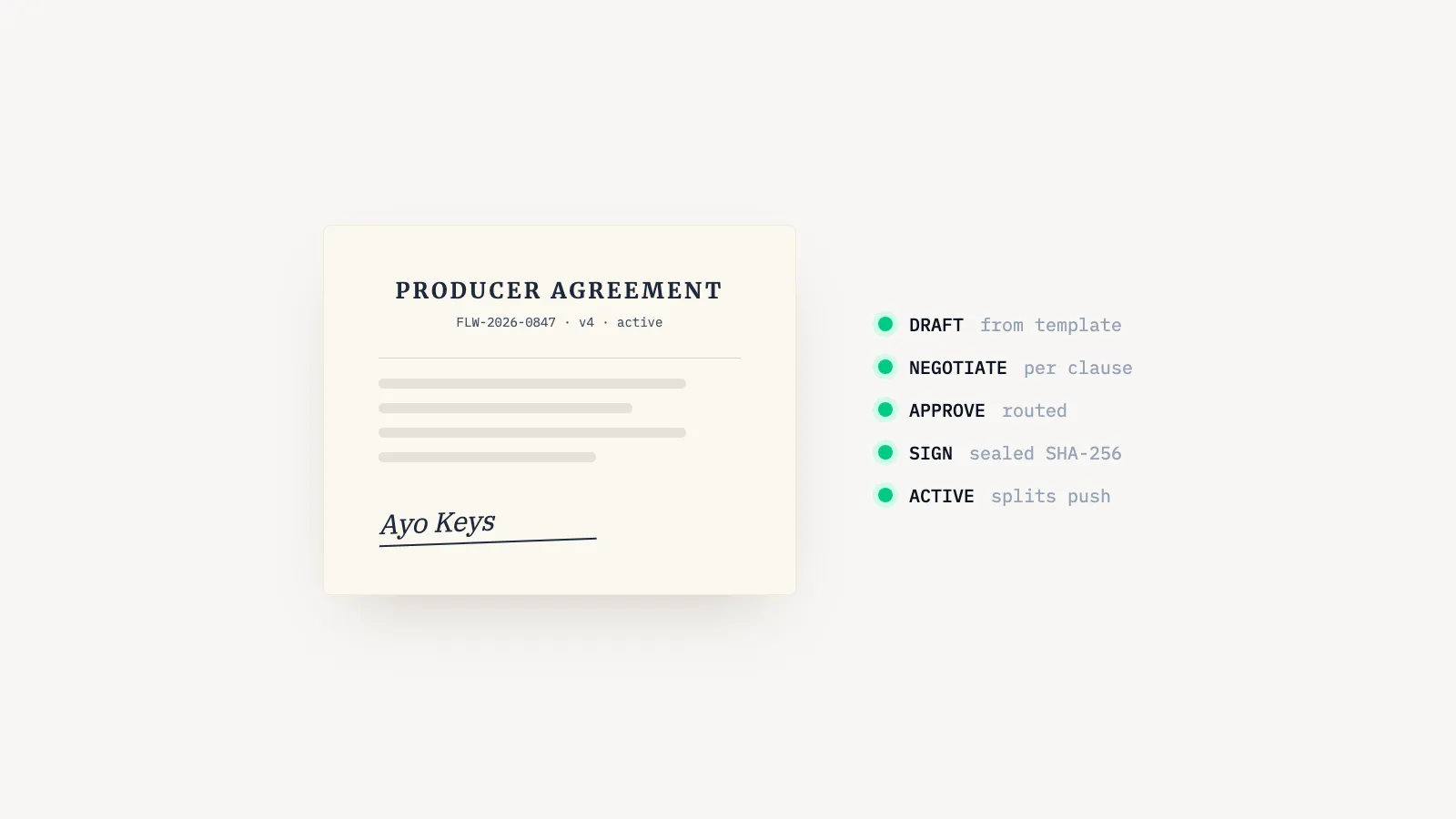
A music contract is not a document. It is a process wearing a document costume. Between “we should do this deal” and “the royalties arrive at the right people” there are drafts, redlines, approvals, signatures, and a schedule of percentages that has to survive all of it.
Here is that whole life, the way FlowRights runs it.
It starts from a template, not a blank page
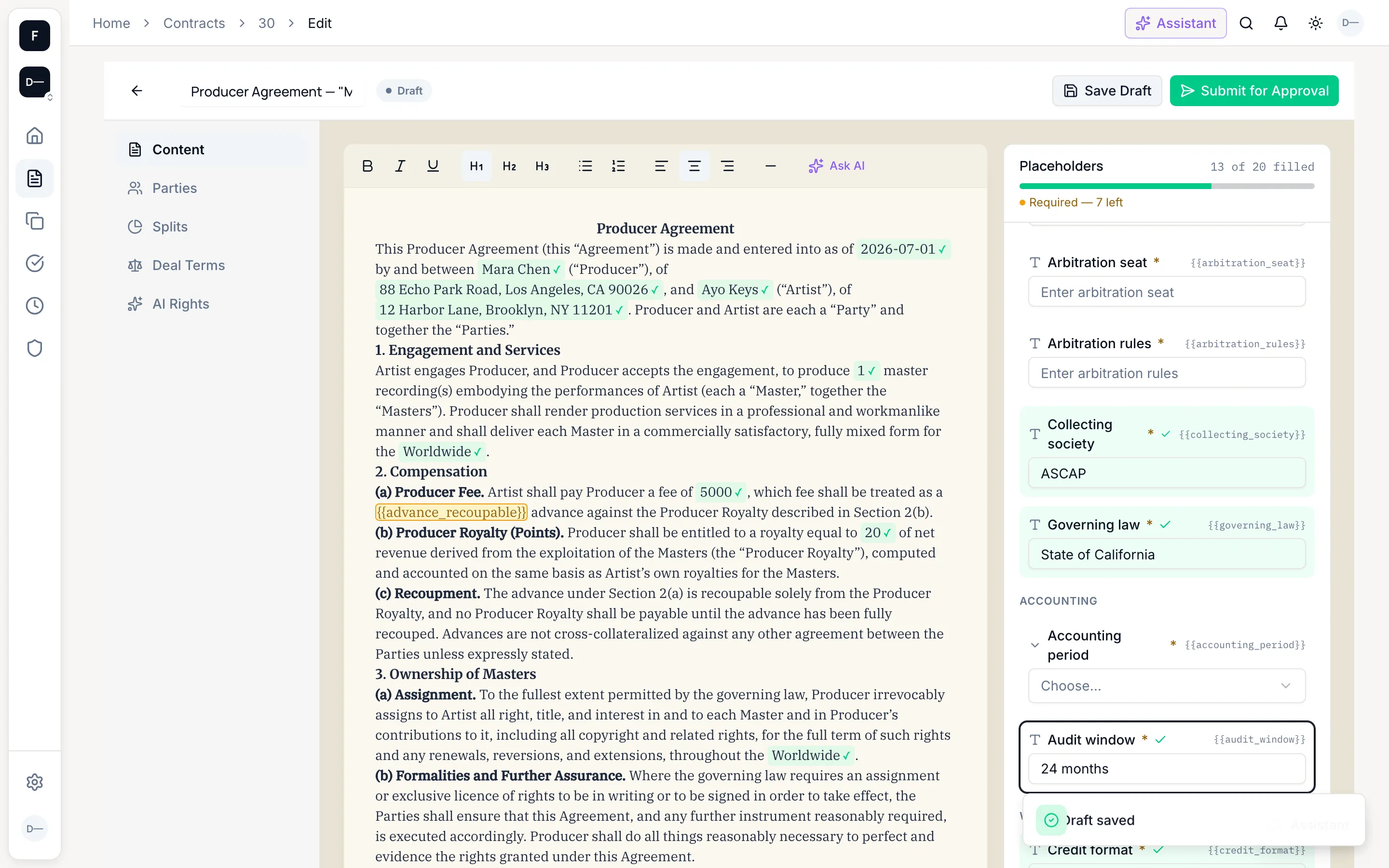
Eleven contract types ship out of the box: producer, publishing, master recording, sync license, distribution, work for hire, co-writing, 360, management, licensing, and other. Template content is jurisdiction-scoped (Nigeria, United States, United Kingdom, or generic), and every template carries a counsel review trail, from draft to approved.
Placeholders in a template know what they are. Fill in a name, a percentage, or a territory once, and the value lands everywhere it belongs: the clause text, the schedule, the split table.
Negotiation happens in the document
Every clause carries its own comment thread. Every edit lands in a tracked version with diffs. When the producer asks for 25 points instead of 20, that conversation sits on the compensation clause itself, and the change is visible as a redline in the next version.
Nothing forks into email attachments, because there is nothing to attach. All parties are looking at the same contract.
Approvals route, then signatures land
Before anything goes out for signing, approval workflows route the contract to the people who need to say yes: a manager, label legal, whoever the deal requires.
Then signatures. Signers can type, draw, or upload. Counterparties sign from a secure link without creating an account, which matters when the other side of the deal has no interest in adopting your software.
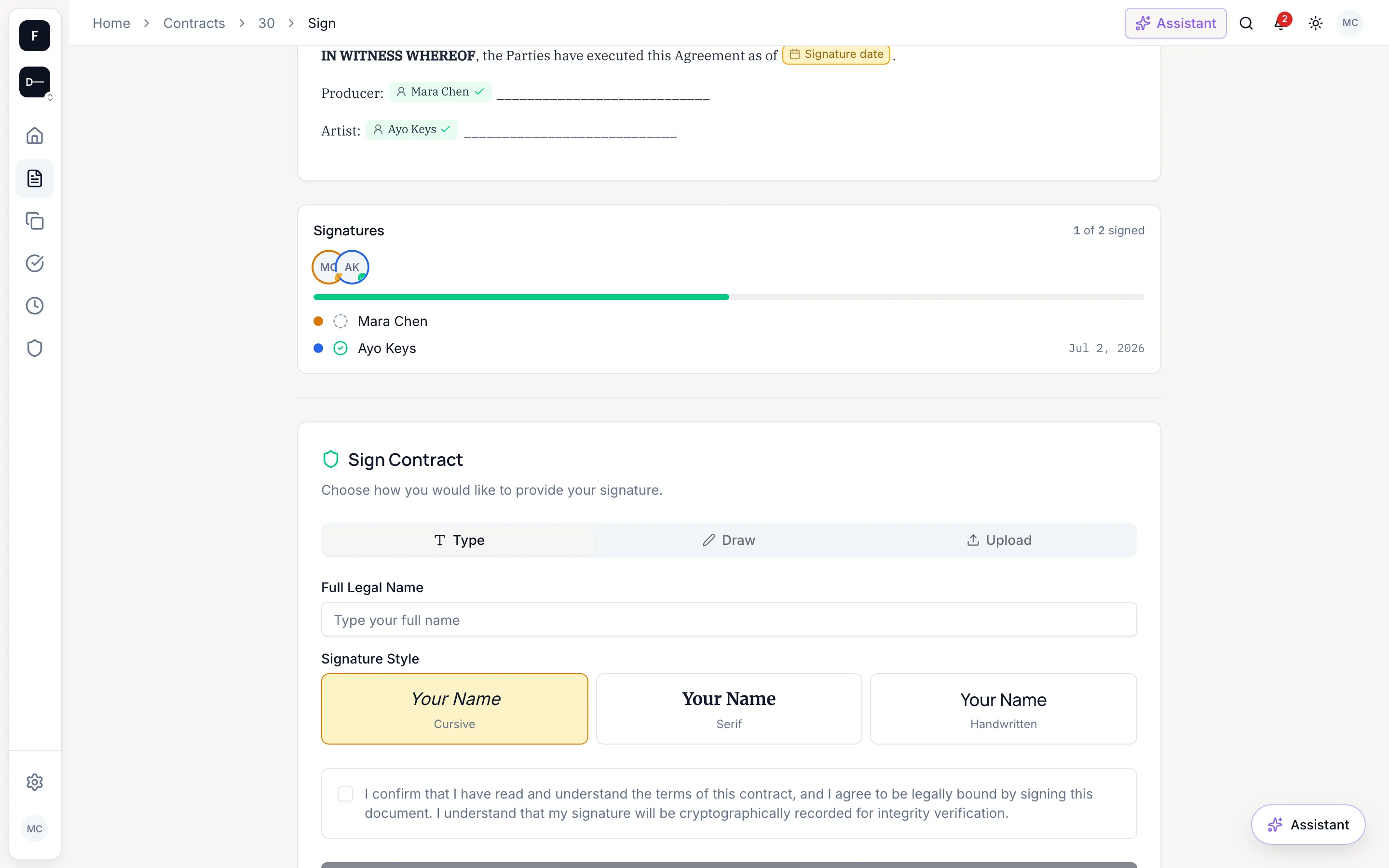
Each signature is sealed with a tamper-evident SHA-256 fingerprint of the exact terms signed. Change the document later and the fingerprint no longer matches.
Active is where most tools stop. It is where this one starts.
Generic e-signature products consider the job finished at the signature. In music, the signature is the halfway point. The percentages that were negotiated and signed still have to reach a royalty system, intact.
When a FlowRights contract goes active, its split terms push to Royalti.io automatically: recorded, retryable, and never blocking the contract. Obligations and deadlines keep being tracked after signing, with due and overdue notifications so the deal’s promises do not evaporate once the ink is dry.
The homepage tells this same story on scroll, one beat at a time. Or skip the story and start a contract.